LINA
How to Track Progress Without the Scale
A supportive guide to track weight loss without scale anxiety using measurements, photos, and performance.
Last updated: 2026-01-14
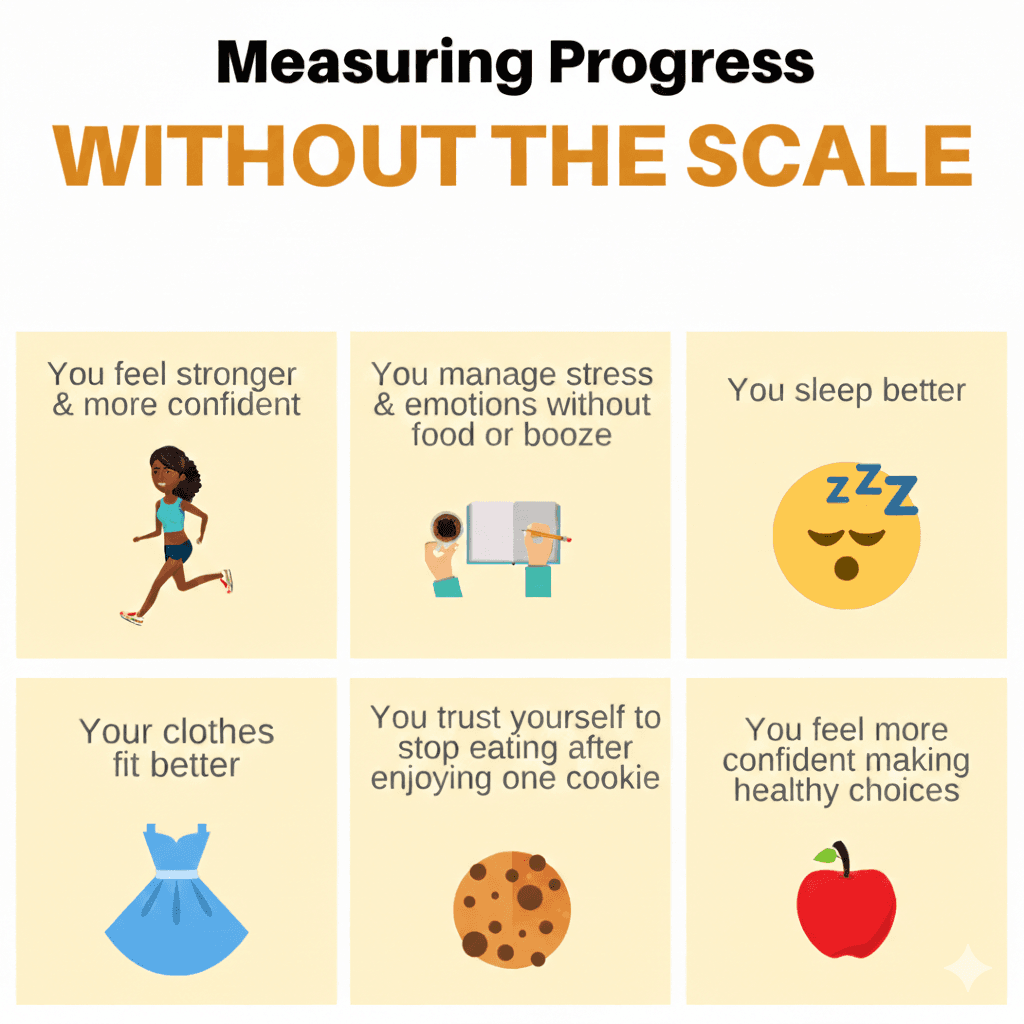
You can track progress without the scale
If daily weigh-ins make you anxious, you can still see progress without weighing every morning.
To track weight loss without scale data, combine a few low stress metrics that move slowly and clearly.
This approach keeps you focused on behaviors and progress without weighing becoming the main event.
When the scale is useful (and when it is harmful)
Useful: when you can treat weight as trend data, measured consistently and averaged weekly.
Harmful: when daily weigh-ins trigger restriction, guilt, or body checking, or during high water phases like travel, stress, or your cycle.
If it spikes anxiety, pause the scale and keep using other metrics.
Measurements: small, steady signals
Pick 2 to 3 spots: waist, hips, thigh, or arm.
Measure once per week at the same time with the same tape tension.
Look for 0.5 to 2 cm changes over a month, not day to day.
Progress photos: same light, same pose
Take front, side, and back photos every 2 to 4 weeks.
Use the same clothing, lighting, and distance each time.
Photos show shape changes even when the scale is stuck.
Strength performance: numbers that matter
Track reps, load, or time for your main lifts or cardio sessions.
If you are getting stronger or your sessions feel easier, your body is adapting even if weight is flat.
Performance gains are proof of progress without weighing.
Energy and hunger signals: daily feedback
Note energy, sleep quality, hunger, cravings, and recovery.
More stable energy and calmer hunger usually mean your plan is sustainable.
These signals help you adjust before burnout sets in.
Clothing fit: the real world test
Choose one pair of jeans or a fitted top and use it as your reference.
Check the fit every 2 to 3 weeks.
Looser waistbands often show progress before the scale does.
Consistency over perfection (simple routine)
Pick a weekly check in day for measurements and a monthly photo day.
Log training performance or step averages so you can see changes in output.
If the majority of signals improve, you are progressing even without daily weigh-ins.
FAQ
How often should I measure?
Once per week is enough to see a trend.
What if I miss a week?
Skip it and resume; consistency over months matters most.
Is it okay to never use a scale?
Yes, if your other metrics keep you consistent.
How to reintroduce the scale without stress
Wait until you feel neutral about the number and can treat it as data, not a verdict.
Weigh 2 to 4 times per week or daily, but only judge the weekly average.
Pair the scale with measurements and photos, and pause again if anxiety returns.
LINA landing sections
Related tracker pages
Put this into action with LINA
LINA helps you track habits and trends so progress feels clear without daily weigh-ins. LINA app to keep calories, macros, and habits in one place.