LINA
Minimum Fat Intake: How Low Is Too Low?
Minimum fat intake matters for hormones and absorption. Learn how low fat is too low and how to diet with fat safely.
Last updated: 2026-01-14
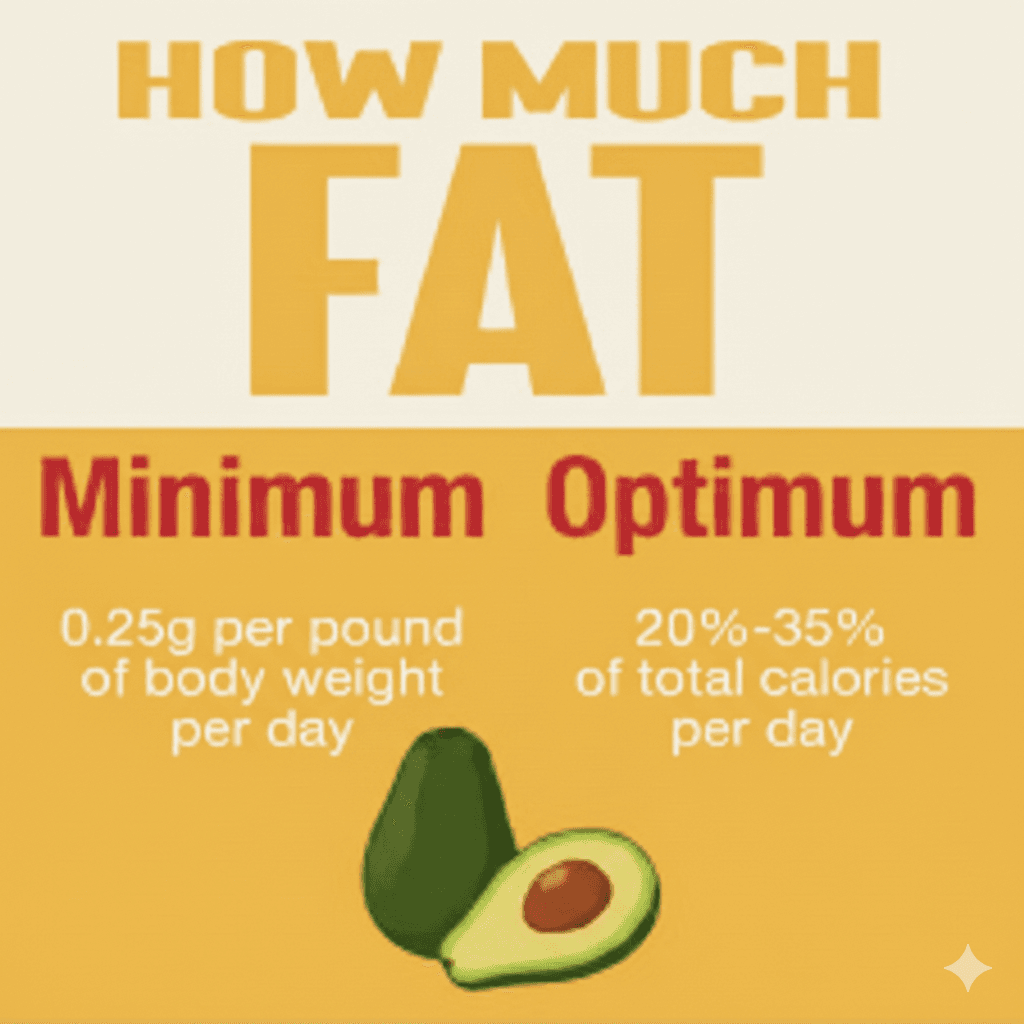
Why fat is essential even in a calorie deficit
Dietary fat supports hormones, brain health, cell membranes, and joint comfort. It also provides essential fatty acids your body cannot make.
Fat is required to absorb vitamins A, D, E, and K, so cutting fat too far can reduce the payoff from an otherwise solid diet.
If you are asking how low fat is too low, think in terms of a minimum fat intake rather than a fat-free plan. In dietary fat dieting, the goal is enough fat to protect health while calories drop.
Reducing fat is not the same as eliminating it
Reducing fat to fit a calorie deficit is normal. Eliminating fat removes essential fatty acids and makes fat-soluble vitamin absorption harder.
Short stretches of lower fat can be fine, but repeated near-zero days raise the risk of symptoms and poor adherence.
Evidence-based minimum fat intake ranges
Most evidence-based recommendations place a practical minimum around 0.6 to 0.8 g of fat per kg body weight per day (about 0.27 to 0.36 g per lb).
Another way to set a floor is percent of calories: roughly 20 to 30 percent of daily calories from fat.
Use whichever minimum is higher, especially during aggressive cuts or high training volume.
Common signs your fat intake is too low
Common symptoms of going too low include low energy, feeling cold, dry skin or brittle hair, low mood, poor recovery, and higher hunger.
Hormone-related signs can show up as irregular or missing periods, low libido, or disrupted sleep.
If these appear, raise fat intake for two weeks and reassess alongside calories.
How to balance fat while staying in a calorie deficit
Set calories first, then protein. Lock in a minimum fat intake, and use remaining calories for carbs based on training and preference.
Favor unsaturated sources like olive oil, nuts, seeds, avocado, and fatty fish, while keeping saturated fat moderate.
Spread fat across meals to improve satiety without blowing the calorie budget.
Practical guideline: prioritize protein first, then balance fats and carbs with the calories you have left.
Related tracker pages
Put this into action with LINA
LINA keeps protein, fats, carbs, and calories aligned so your deficit stays steady. LINA app to keep calories, macros, and habits in one place.