LINA
Protein Intake Explained: How Much Protein Do You Actually Need?
Evidence-based protein intake ranges by body weight and goal, with minimum, optimal, and excess guidance for fat loss.
Last updated: 2026-01-14
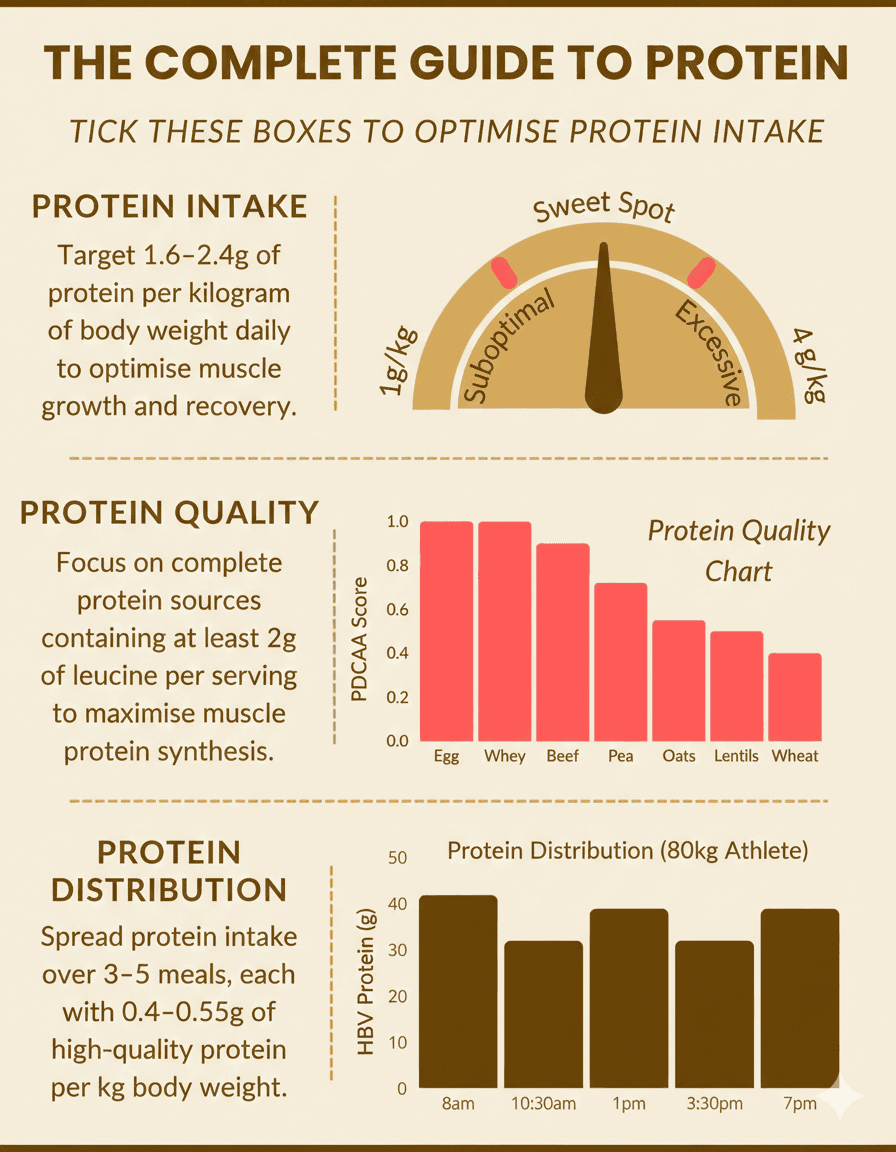
Protein's role in fat loss and body composition
Protein supports muscle retention, satiety, and a higher thermic effect than carbs or fat. For protein for fat loss, that means you keep more lean mass while eating fewer calories.
Protein does not magically burn fat, but it makes a calorie deficit easier to maintain and helps preserve results.
Why protein needs vary (and why advice conflicts)
Protein needs depend on body weight, activity level, and goal. A smaller, sedentary adult needs less than someone who trains or is dieting aggressively.
That is why online advice sounds contradictory. When you ask, "how much protein do I need," the right answer depends on your context.
Minimum vs optimal vs unnecessary excess protein intake
Minimum protein for basic health is about 0.8 g per kg of body weight for most adults.
Optimal protein for fat loss or resistance training is usually 1.6 to 2.4 g per kg. This range supports muscle retention and keeps hunger lower.
Unnecessary excess is typically above 2.4 g per kg for non-athletes. It rarely adds benefit and can crowd out carbs, fats, and fiber.
Protein per kg ranges by activity level
Sedentary adults: 0.8 to 1.2 g per kg of body weight.
Active adults with regular walking or light training: 1.2 to 1.6 g per kg.
Resistance training or dieting: 1.6 to 2.4 g per kg.
If you carry a lot of body fat, use a realistic target body weight so the protein number stays practical.
Common mistakes that hold progress back
Too little protein intake because calories are the only focus, which makes hunger and muscle loss more likely.
Over-prioritizing carbs or fat so protein gets squeezed out, especially at breakfast or lunch.
Saving most protein for one meal instead of spreading it across the day, and chasing very high numbers without a clear reason.
Practical example: 70 kg person cutting weight
A 70 kg adult aiming for fat loss can target 1.6 to 2.0 g per kg. That is 112 to 140 g of protein per day.
Split across 3 to 4 meals, that is roughly 30 to 40 g per meal, which is easier to hit consistently.
Clear takeaway
Minimum protects health, optimal supports body composition, and excess adds little. Pick a range, not a perfect number, and adjust based on weekly averages.
Calories and protein work better together
Calories decide weight change, but protein helps preserve muscle and manage hunger. Tracking calories with protein awareness works better than calories alone.
LINA landing sections
Related tracker pages
Put this into action with LINA
LINA keeps protein targets visible next to meals so you can adjust in real time. LINA app to keep calories, macros, and habits in one place.